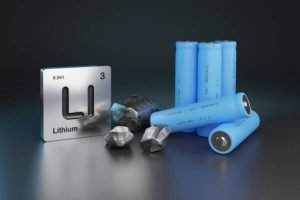
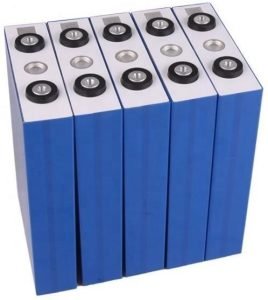
When you go on a camping trip one of the biggest things to consider is charging your devices. Whether it’s your cell phone, camera, portable speaker or lights, electricity is something that will improve your outdoor experience. This is where portable batteries play a role.
This article will go over the top portable powers for camping and their various features and specifications so you know what to look for when it comes to bringing the right ones to your next camping trip. Let’s jump in.
Before we dive into the list of portable batteries, we want to consider who’s buying and why. The obvious answer is anyone who likes camping and the outdoors and wants to have some sort of power while enjoying nature. Whether you’re a seasoned camper or a beginner just getting started, you’ll be able to keep in touch with your friends and family or that new gadget you brought along.
Top 5 Best-Selling Camping Portable Batteries on the Market
- Anker 535 Solar Generator
- Goal Zero Yeti 1400
- Jackery Explorer 240
- EcoFlow River 2 max
- Bluetti AC50S
#1 Anker 535 Solar Generator
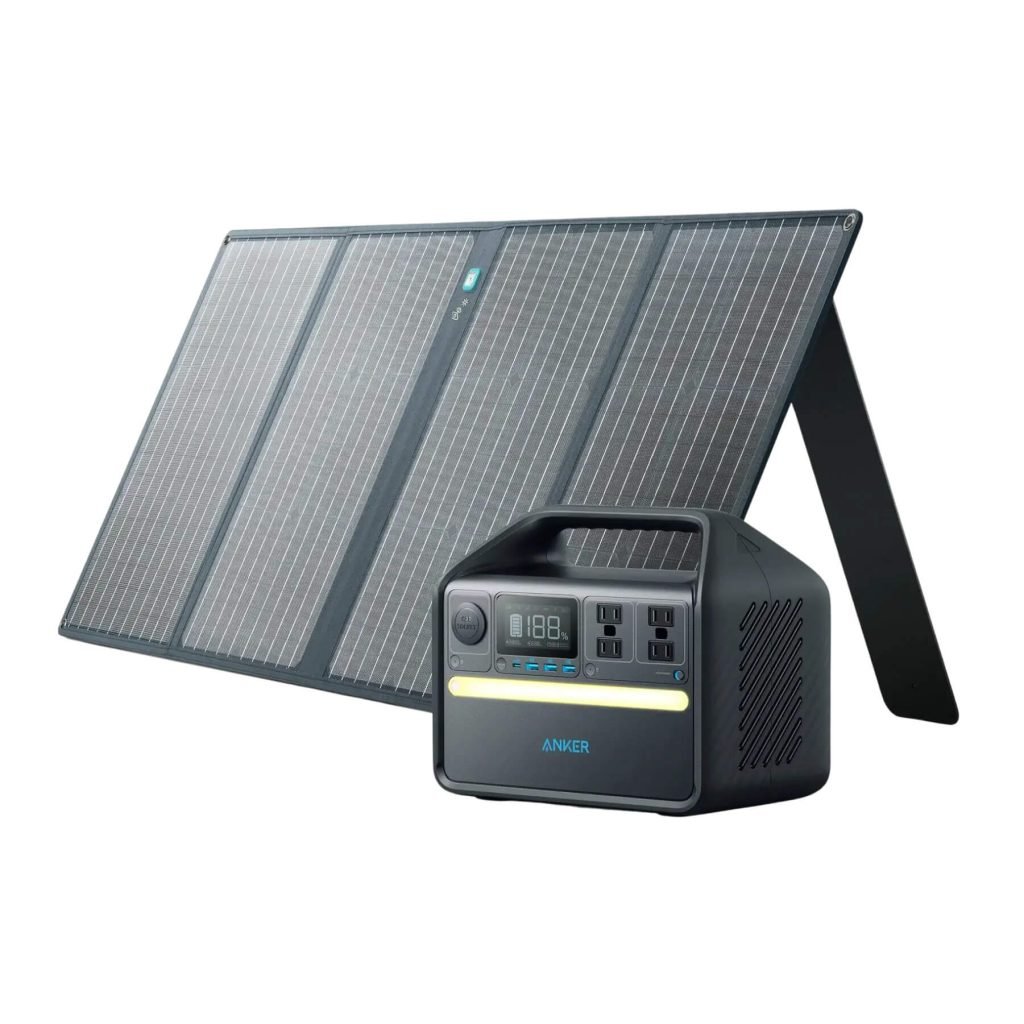
Image source: Anker
Features and specifications of Anker 535 Solar Generator
Dimension:
- 11.4 x 7.5 x 7.2 inches
Features:
- Long-Lasting Portable Power Station With a 10-Year Lifespan: With our proprietary long-lasting technology InfiniPower™, combined with LiFePO4 batteries, ultra-durable electronic components, a smart temperature control system that monitors temperature up to 100 times per second, and impact-resistant structural design, Anker 535 PowerHouse is built to last over a decade, even with everyday use.
- High Conversion Efficiency: The solar panel converts up to 23% of solar energy to electrical energy even on cloudy days. Recharge the panel to 80% in 2.5 hours under direct sunlight.
Specification:
- Capacity: 160,000mAh (40*4000mAh) 512Wh
- USB-C: 5V⎓3A/ 9V⎓3A/ 15V⎓3A/20V⎓3A (60W Max)
- AC Output: 110V~ 4.54A, 50Hz/60Hz, 500W
- USB-A Output: 5V⎓7.2A (2.4A Max Per Port)
- DC Input: 11-28V⎓ 10A (120W Max)
Pros and cons of Anker 535 Solar Generator
| Pros: | Cons: |
|
|
#2 Goal Zero Yeti 1400
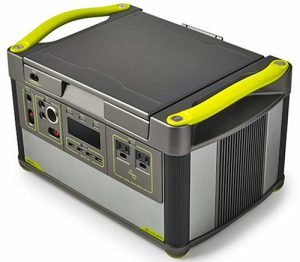
Image source: Goal Zero
Features and specifications of Goal Zero Yeti 1400
Dimension:
- 10.1 x 15.3 x 10.4 in
Features:
- On-demand Power for use Indoors and Out
With no gasoline needed, the Goal Zero Yeti 1400 operates with zero fumes and zero noise for an easy-to-use, plug-and-play way to power all your essential electronics and appliances at the push of a button. - Power Phones, Fridges, Power Tools, Lights, and More
Features 1425 watt-hours (132,000mAh/10.8V, 396,000mAH/3.7V) and versatile outputs (2.4A USB, AC and 120W 12V) for charging up to 10 devices at once. - Ultra-safe Lithium Battery
We start with quality lithium cells, known for stability, monitored by a state-of-the-art battery management system that prevents over-charge, over-current, and short circuiting.
Specification:
- Lifecycles: 500 Cycles to 80% capacity (Discharge rate: 1C, Full charge/discharge, Temp 25C)
- Management System: PWM charge controller, low battery protection
- USB Port (output): 5V, up to 2.4V (12W max), regulated
- 12V car port (output): 12V, up to 10A (120W max)
Pros and cons of Goal Zero Yeti 1400
| Pros: | Cons: |
|
|
#3 Jackery Explorer 240
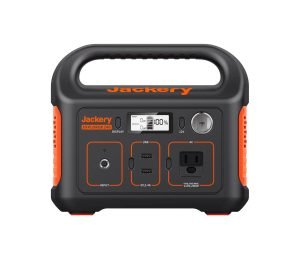
Image source: Jackery
Features and specifications of Jackery Explorer 240
Dimension:
- 9.05 * 5.24 * 7.78 inch
Features:
- Quick AC charging in 5.5 hours
- 240Wh Capacity, 200W (400W Surge Power)
- Multiple Output Ports
- Pure Sine Wave AC outlet
- Lightweight and Portable
Specification:
- AC Output(x1): 110V, 60Hz, 200W (400W Peak)
- AC Input: doesn’t support direct AC charging – use external AC charger provided
- USB-A Output(x2): 5V⎓2.4A
- DC Input: 24V⎓3.75A
- Car Port(x1): 12V⎓10A
Pros and cons of Jackery Explorer 240
| Pros: | Cons: |
|
|
#4 EcoFlow River 2 max
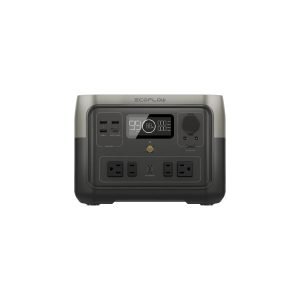
Image source: EcoFlow
Features and specifications of EcoFlow River 2 max
Dimension:
- 10.6 x 10.2 x 7.7 inches
Features:
- Charge 0-100% in only 60 mins
- Safe and reliable for 10 years of use
- Run up to 80% of essential appliances
- Essential home backup with a 30ms switch-over mode
Specification:
- AC Input: 100-120V 50Hz/60Hz, 660W Max
- Solar Input: 11-50V, 13A, 220W Max
- USB-C Input/Output: 5/9/12/15/20V, 5A, 100W Max
- DC Output: 12.6V, 10A/3A/3A, 126W Max
Pros and cons of EcoFlow River 2 max
| Pros: | Cons: |
|
|
#5 Bluetti AC50S
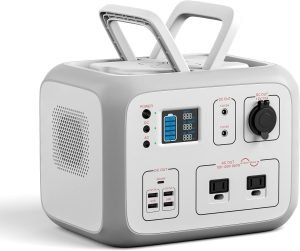
Image source: Bluetti
Features and specifications of Bluetti AC50S
Dimension:
- 12.6 x 8.5 x 8.7 inch
Features:
- Safer & Cooler & Greener, the premium EV-Level 3C-rated lithium battery generator, has 500Wh huge capacity and 1000+ life cycles with 100% performance, while the Battery Management System (BMS) enables short circuit protection, voltage control, temperature control, and more advanced safety operations.
- Built-In MPPT technology makes AC50S get recharged 40% faster with efficient solar panels. With the 120W max input solar power, you can get it fully recharged in 5-6 hrs. It takes approximately 6 hrs to fully recharge from an AC wall outlet (90W AC adapter included), 5-5.5 hrs from a 12V/24V car port, and 6 hrs from a generator.
- Designed for portability, this powerful AC50S weighs only 13.6lbs, makes it easy to carry around for outdoor or backyard use. And thanks to the foldable handle & compact size, you can store BLUETTI AC50S easily with less space for home use as a solid backup power during a power outage.
Specification:
- Capacity: 32,000mAh 22.4V/716Wh
- 4*AC Outputs: 100-120V, 800W (1600W Surge) , 50Hz / 60Hz, Pure Sine Wave
- 2*USB Type-C Outputs: 100W Max (5V/3A, 9V/3A, 12V/3A, 15V/3A, 20V/3A, 20V/5A)
- 2*DC Outputs: Regulated 12V/10A, 5.5mm x 2.1mm
Pros and cons of Bluetti AC50S
| Pros: | Cons: |
|
|
Are you going on a camping trip soon? And thinking of portable power for your camping equipment? Some of the best and popular solar generators for camping are Anker 535 Solar Generator, Goal Zero Yeti 1400, Jackery Explorer 240, EcoFlow River 2 max, and Bluetti AC50S. Of course, each of these five units has its own characteristics, advantages, and disadvantages. Let’s take a look at each of these five best portable solar generators and see how they stack against one another in terms of staying connected while camping.