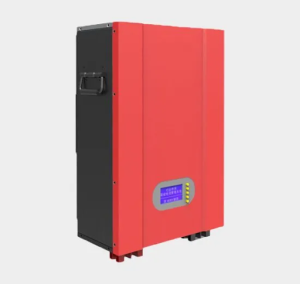
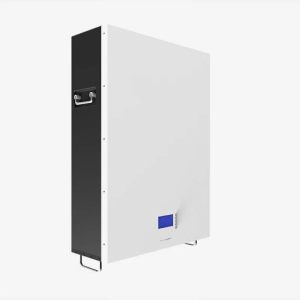
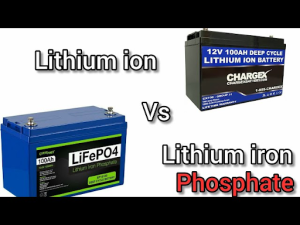
With the increasing demand for reliable power storage solutions, LiFeO4 batteries top the list as the preferred option to the conventional lead-acid batteries. Their superior performance, higher efficiency rating, safety, longer lifespan, and more, attest to their popularity and in-demand.
The real deal in ensuring their steady power output and longevity lies in the battery’s proper charging method. There are some special considerations and requirements that businesses need to put in place for their lithium iron phosphate battery to function optimally.
Are you seeking to replace your lead-acid battery with a LiFePO4 battery for your office appliances? If yes, PPGlob advises you to consider a charger compatible with your battery’s chemistry. Good enough; in this comprehensive guide, we’ll simplify how to charge your LiFePO4 batteries effortlessly. Read further as we go deeper!

Understanding Lithium Iron Phosphate Batteries Chemistry
In this section, we’ll demystify the components of a LiFePO4 battery and how its constituents help power working devices.
What are Lithium Iron Phosphate (LiFePO4) Batteries?
Lithium iron phosphate (or LFP or LiFePO4) batteries are a type of lithium-ion rechargeable battery that uses iron phosphate as its cathode material. It has an edge over lithium-ion batteries in terms of its safety and cycle life (lasts 4×5 longer).
Additionally, LFP batteries are non-contaminating, non-toxic, and contain no rare earth metals. These qualities make the batteries an eco-friendly choice.
What are the Chemical Components of LiFePO4 Batteries?
The outstanding characteristics of LiFePO4 battery are linked to its chemical components which mainly comprise lithium (Li), Iron (Fe) and Phosphorus (P), and Oxygen (O4).
- Cathode material – LiFePO4
- Conductive carbon additives
- Binder and electrolyte
- Separator
- Anode material
Basics of LiFePO4 Battery Charging
Read on to learn about the LiFePO4 battery charging parameters and the recommended measures from PPGlob, a Chinese-based LFP battery manufacturer and supplier with global impact.
Adhering to these measures prolongs the battery’s lifespan, ensures efficient energy storage, and prevents overcharging.
In a nutshell, understanding and applying the recommended parameters is crucial to maintaining the health and performance of LFP batteries to serve various applications.
What are the Charging Phases for LiFePO4 Batteries?
The most popular charging method for an LFP battery is a three-stage phase: Constant Current (CC), Constant Voltage (CV), and Float Voltage.
Stage 1. Constant Current (CC)
The constant current phase is also known as the bulk stage, where the battery rapidly charges at a constant current until it reaches a termination voltage. The charging is typically done at 10%-30% (less than or equal to 0.5C) current of the battery’s capacity rating.
Stage 2. Constant Voltage (CV)
The constant voltage phase is also called the absorption voltage. At this phase, the battery continues to charge at a constant current until it reaches an absorption voltage, and it is held until the current decreases to below 5% of the battery’s capacity rating.
Stage 3. Float Voltage
The float phase is necessary if the battery is used in a standby application where it needs to be maintained at full capacity until it is ready for discharge. In most cases, float voltage is not required in lithium-ion batteries because they do not leak charge.
Voltage and Current Parameters
An understanding of the relevant voltage characteristics of a LiFePO4 battery helps users optimize their performance and extend their lifespans. In summary, an LFP battery has a nominal voltage of 3.2 volts per cell. This figure shows the average voltage at which the battery can operate under normal conditions.

For instance, a PPGlob 12V LiFePO4 battery has four individual cells with a nominal voltage of 3.2 volts per cell. When fully charged (80%-100%), the nominal voltage reaches about 3.6 to 3.7V per cell, which is approximately 13.3-14.6V and at 2.5V per cell, they are fully discharged. The chart above illustrates the LiFePO4 voltage and current curve for a 12V battery.
Check the table below to have an overview of our various LiFePO4 battery voltage options, charging range and current;
| Battery Type | 12V | 24V | 48V |
| Nominal voltage | 12.8V | 25.6V | 48V |
| Charging voltage (fully charged) | 13.3-14.6V | 26.6-29.2V | 53.1-58.4V |
| Recommended charging current | 50-400A | 50-200A | 18-200A |
Keep in mind that PPGlob is your number-one go-to for all lithium iron phosphate battery types and we design based on your brand’s needs and specifications.
Choosing the Right Charger
When choosing the correct charger for a LiFePO4, we advise customers to select the one that aligns with the battery’s chemistry. Let’s consider the type of charger that is ideal for a LFP battery and key features to look out for.
Types of LiFePO4 Battery Chargers
Let’s talk about the different LFP battery chargers in the market today. The type you select depends on the application to charge and how often it will be used.
1. Smartphone chargers
These chargers are small, portable, and made explicitly for recharging smartphones and other mobile devices. These multi-chemistry chargers are often accompanied by USB ports for easy and quick charging of multiple mobile appliances.
2. Solar Power chargers
These chargers use solar energy to recharge LFP batteries. Although, they offer greater long-term sustainability and reliability in remote areas where grid electricity is scarce. However, they take longer to charge the batteries.
3. Programmable chargers
These chargers give complete control over how the battery is charged, as they are programmed based on specific needs and desired outcomes. The charger protects the battery from overvoltage or undervoltage conditions that can impede its performance or lead to failure.
4. Automatic chargers
They work by detecting a transition in current during charging and then adjusting their output within safe limits built inside them. They are self-adjusting and require no manual input from users. Automatic chargers are convenient but require constant maintenance based on the type/manufacturer’s specifics.
Key Features to Consider When Selecting a Charger
In addition to the charger type, other key features must be considered when selecting a LiFePO4 battery charger.
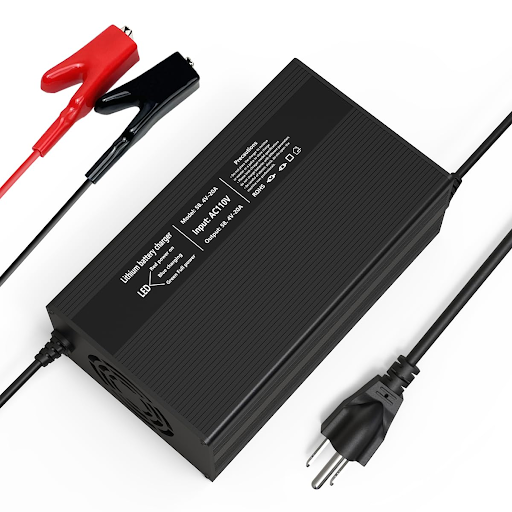
- Voltage and current settings: Ensure the charger’s output voltage aligns with your battery’s voltage. Also, the charger’s current output must match or exceed your battery’s charging current threshold. A mis-normal in these two parameters can reduce the efficiency or damage your system.
- Protection features: Protection features like overcharge, overcurrent, and short circuit should also be considered. Overcharging prevents batteries from overcharging, which can make them unstable, inefficient, or lead to damage. Short circuit protection prevents short-circuiting caused by incorrect wiring or other malfunctions.
- Balance charging for multi-cell packs: Select a charger that can fit in multi-cell packs to maximize capacity and save time. For example, the smartphone charger discussed earlier.
Step-by-Step Charging Process
Preparation
- Inspecting the battery: Ensure the LiFePO4 battery’s voltage and capacity fit the expected application.
- Proper connections: Connect the charger to a power source, either DC or AC, depending on its specifications
Charging steps
- Setting up the charger: Check its settings and ensure it meets the battery’s current and voltage specifications.
- Connecting the battery: Carefully connect the charger to the battery’s positive (+) and negative (-) terminals.
- Initiating the charge: Turn on the power source to start the charging
- Monitoring the process: With the aid of a battery monitor or multimeter, monitor the charging process. Please keep a close marking on the temperature, voltage, and current of the battery as it charges.
Safety precautions
- Avoid overcharging: Disconnect the charger immediately after the battery reaches its full charging level.
- Ensuring proper ventilation: It prevents the battery from overheating, which may cause a fire outbreak.
- Monitoring temperature: Extremely high temperatures during charging can lead to permanent loss of capacity of LiFePO4 batteries.
Advanced Charging Techniques
An advanced charging technique for lithium iron phosphate batteries ensures faster charging and improved safety precautions.
- Balance charging: This is the most common method that ensures the battery cells are fully charged to maximum capacity. It also prevents over-discharging of the cells during usage.
- Using Battery Management Systems (BMS): Guarantees the best performance and protects the cells through many cycles. It monitors and manages the battery pack cells, keeping them within its safe limit. PPGlob LiFePO4 batteries have built-in BMS that offer protection at crucial stages such as overcharging, over-discharging, excess current flow, or short circuits.
- Parallel and series charging considerations: Ensure that battery cells of the same type, capacity, and state-of-charge (SOC) are connected, whether in series or parallel.
Frequently Asked Questions (FAQs)
1. What is the best charging practice for LiFePO4 batteries?
Keep your LFP batteries charged between 20-80%. Keep it from going too low, and avoid a full charge.
2. Is it Okay to charge LiFePO4 to 100%?
No, 100% charge can negatively impact your battery’s lifespan and safety.
3. What voltage should I charge my LiFePO4 battery?
For 12V LiFePO4 batteries, the expected charging voltage range is 13.3-14.6V. See the table above for more information.
Conclusion
We know this comprehensive guide to charging LiFePO4 batteries can be overwhelming. That’s why we are here to help you. Suppose you want to learn more about our lithium-ion battery systems to make a well-informed decision for your brand. We are just a click away. PPGlob is committed to serving your business’s needs and requirements. Request a free quote now!