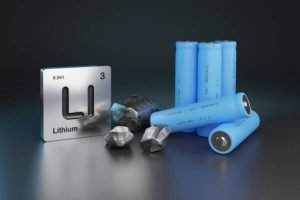
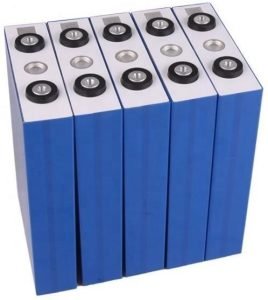
Consider yourself an off-road kind of person? An overlander who enjoys portable power stations? Like to take your vehicle off-road and camp in isolated areas? If so, you understand how crucial it is to have a power station ready to supply electricity to your devices, equipment and even appliances. Enter portable power stations.
In this post, we’re going to give you an in-depth guide for the best lithium portable power station for overlanding. We’ll share with you pro tips on things to consider when purchasing a portable power station, as well as our PPGlobenrtable power stations recommendations to help you make the.
What is the best lithium portable power station for overlanding?
The typical power range for portable power stations in the overlanding space generally falls between 400Wh – 1500Wh. This power range gives you enough energy to charge your phone, laptop, camera, LED lighting and even small appliances, ensuring that overlanders have the luxury of staying connected and comfortable while exploring off-grid.
Top 5 Hot-Selling Camping Portable Power Bank for Overlanding on the Market
- Goal Zero Yeti 500X
- Jackery Explorer 500
- EcoFlow Delta 1300
- Bluetti EB150
- Anker PowerHouse II 400
#1 Goal Zero Yeti 500X
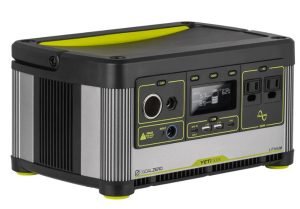
Image source: Goal Zero
Features and specifications of Goal Zero Yeti 500X
Dimension:
- 15.25 x 10.23 x 9.86 in
Features:
- Recharge from the sun by connecting a compatible solar panel. Charge times are dependent on the size of the solar panel. The Boulder 100 Briefcase will provide 100W of solar and fully recharge the Yeti 1000X in 12-24 hours.
- Plug it into the wall. Fully recharges in 9 hours using the included 120W Power Supply AC Wall Charger. Not quick enough? Drop your recharge time to 2 hours using the available 600W Power Supply or 4.5 hours with the 230W Power Supply.
Specification:
- AC Wall Chargers (600W Input Max): I found handle AC wall chargers with a maximum input of 600 watts, ensuring efficient charging from standard outlets.
- 1200W* Rated Panels (4x Ranger 300/etc.): 2 hours of sunlight. When paired with 1200-watt rated solar panels, such as 4x Ranger 300 panels, I can harness two hours of sunlight to recharge efficiently.
- Pack capacity: 983Wh (10.8V, 91Ah): Its pack capacity is 983 watt-hours, with a voltage of 10.8 volts and an ampere-hour rating of 91Ah, providing ample power for your needs.
- Management system: MPPT charge controller: With an MPPT charge controller, I noticed optimize energy conversion from solar panels, ensuring maximum efficiency during charging cycles.
- Lifecycles: 500 Cycles to 80% capacity: They are designed for longevity, with a lifespan of 500 charging cycles, maintaining at least 80% of capacity throughout each cycle.
Pros and cons of Goal Zero Yeti 500X
| Pros: | Cons: |
|
|
#2 Jackery Explorer 500
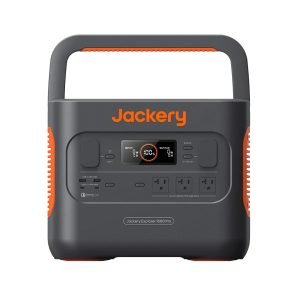
Image source: Jackery
Features and specifications of Jackery Explorer 500
Dimensions:
- Measured 11.8 inches in length, 7.6 inches in width, and 9.2 inches in height, making me compact and easy to carry on your adventures.
Features:
- Having a 518 watt-hour capacity and a 500-watt inverter, with the ability to surge up to 1000 watts when needed. It can be used to charge multiple appliances at the same time. This will offer you a lot of convenience when you are out on an outdoor activity. My lightweight and portable design will give you the convenience of carrying me along wherever you are going.
Specification:
Its 518 watt-hours, and using lithium-ion cell chemistry. With a cycle life of 500 cycles to 80% capacity, I’m built to last. Its AC output provides 110 volts at 60 hertz, with a power output of 500 watts (and a peak of 1000 watts). Additionally, It has two DC outputs at 12 volts and 7 amps each, as well as three USB-A outputs at 5 volts and 2.4 amps each. Though without supporting direct AC charging, you can recharge me using the external AC charger provided.
Pros and cons of Jackery Explorer 500
| Pros: | Cons: |
|
|
#3 EcoFlow Delta 1300
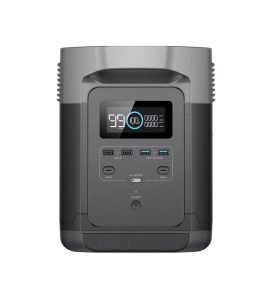
Image source: EcoFlow
Features and specifications of EcoFlow Delta 1300
Dimension:
- 16 * 8 * 11 inch
Features:
- 6 x 1800W AC outlets and 1260Wh capacity: DELTA can power up to 13 devices simultaneously with multiple outlet options, including 6 pure sine wave AC outlets. With a massive 1260Wh of power, this is a great option for home backup scenarios where you need to keep your phones, laptops, fridge and other appliances running.
- Recharge from 0% to 80% within 1 hour: The patented EcoFlow X-Stream technology enables you to charge the DELTA from 0-80% within 1 hour and offers a full charge in just 2 hours. Use the EcoFlow 160W Solar Panel to charge DELTA in 10.5-21 hours at a recharging rate of 10-65V/10A max, 400W max input.
Specification:
- Wattage: 1800 watts
- Power source: solar powered
- Fuel type: electric
- Maximum power: 160 watts
Pros and cons of EcoFlow Delta 1300
| Pros: | Cons: |
|
|
#4 Bluetti EB150
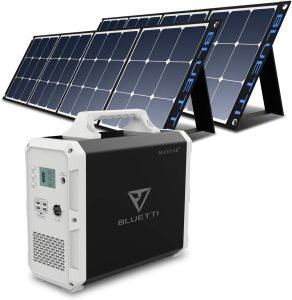
Image source: Bluetti
Features and specifications of Bluetti EB150
Dimension:
- 14.6 * 6.5 * 14.4 inch
Features:
- Capacity: 1500Wh/1000W,Top-Brand Lithium Polymer Battery Cell ,2500+ cycle life
- Load: Continuous 1000W(1000W-load-1200w@2mins,Above 1200W,turn off)
- Solar Input: Max.500W, OCV 16-68V,Current Max.10A, MPPT
Specification:
- Wattage: 1000 watts
- Fuel type: gasoline
- Power source: solar powered, battery powered
Pros and cons of Bluetti EB150
| Pros: | Cons: |
|
|
#5 Anker PowerHouse II 400
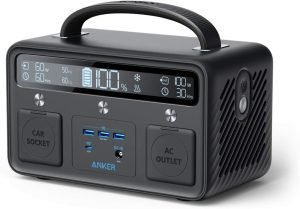
Image source: Anker
Features and specifications of Anker PowerHouse II 400
Dimension:
- 10 × 5.8 × 5.5 inch
Features:
- From powering appliances to charging mobile devices at high speed, PowerHouse’s 8 ports provide enough charging options for you to power you and your family’s entire trip.
- Features a 60W USB-C port equipped with our exclusive PowerIQ 3.0 technology to charge mobile devices at high speed. Charge a MacBook Air 2020 to 50% in just over 40 minutes, or charge an iPhone 11 to 50% in only 30 minutes.
Specification:
- Rated Capacity: 27,000mAh 14.4V/388.8Wh
- AC (Pure Sine Wave): 110V~ 2.72A, 50Hz / 60Hz, 300W
- USB-A: 5V 7.2A (2.4A Max Per Port)
- USB-C: 5V 3A / 9V 3A /15V 3A / 20V 3A (60W Max)
- USB-C Input: 5V 3A/9V 3A/15V 3A/20V 3A (60W Max)
- DC Input: 11-28V 5.5A (65W Max)
Pros and cons of Anker PowerHouse II 400
| Pros: | Cons: |
|
|
In this article, we will discuss the 5 best portable power stations for outdoor adventures in terms of features, specifications, and pros and cons thereby allowing adventurers to make the best choice for their adventure.
PPGlob 600W, 1200W and 1500W models are also recommended because they can be stacked together as a multi-power solution. They have built-in lithium-ion batteries, various output ports with good looking designs to offer consistent power for outdoor adventures. With 600 watt-hours, 1200 watt-hours and 1500 watt-hours capacities respectively, they serve as portable power stations for charging devices and operating off-grid home appliances.