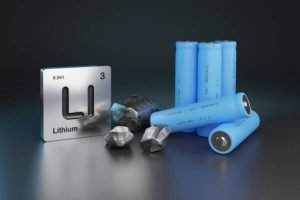
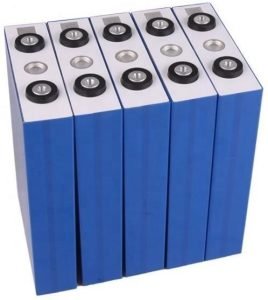
The lithium battery industry has been evolving rapidly to cater to the ever-increasing power needs of various electronics and equipment. Over the past two decades, numerous sizes and shapes of lithium batteries have been produced to meet fluctuating demands. Among these, the 18650 battery vs 21700 stands out as the most prominent contenders in terms of size and capacity.

18650 Battery Cell Basics:
- Introduced in 1994 by Panasonic.
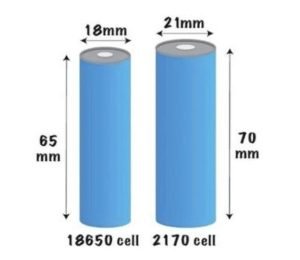
- Dimensions: 18mm diameter and 65mm length.
- Capacity: 2,300 mAh to 3,600 mAh.
- Voltage: 3.6 volts to 3.7 volts.
- Widely used in electric cars, drones, medical devices, and mil-aero equipment.
- In 2013, approximately 2.55 billion 18650 cells were produced.
21700 Battery Cell Basics:
- Introduced in 2017 in collaboration between Panasonic and Tesla.
- Dimensions: 21mm diameter and 70mm length.
- Capacity: 4,000 mAh to 5,000 mAh.
- Voltage: Similar to 18650, i.e., 3.6 volts to 3.7 volts.
- Designed to replace the 18650 for electric vehicles.
18650 vs 21700 size
18650 vs. 21700 Cell Comparison:
- 21700 batteries have 50% more capacity than 18650.
- 21700 cells have a higher energy density and a discharge rate of 3.75c.
- Both cells have similar charge and discharge rates.
- 21700 cells have lower resistance and stronger heating.
Industry Expectations:
Manufacturers view the 21700 as a potential replacement for older lithium cell versions due to its ease of manufacturing and higher capacity. However, the 18650 will continue to be produced for applications that don’t require the larger capacity of the 21700 or where space constraints dictate a smaller cell size.
Higher Capabilities:
The advancements in battery technology are not just limited to capacity and size. Modern batteries, especially in the realm of rigid-flex circuit boards, offer superior capabilities than traditional rigid circuit boards. They can handle high-speed signals, provide excellent EMI and RF shielding, and are resilient in harsh environments.
21700 vs 18650 Battery Life:
- The runtime of power tools powered by 18650 batteries is anywhere from 50 to 100 percent longer than that powered by 21700 batteries.
- The 21700 battery has a capacity of roughly 4000 to 6000mAh, while the 18650 battery has a capacity ranging from 2600 to 3600mAh. As a result, the 21700 battery can operate without charging for a more extended period than the 18650 battery.
- Knowing the battery life helps clients determine which cell can serve them for a more extended period.
21700 vs 18650 Costs:
- There is a noticeable difference in cost between the two types of batteries. Typically, 21700 batteries are more expensive than 18650 batteries.
- The 21700 battery is a newer model than the 18650 battery and offers additional features.
- When converting to a 21700 system, the 18650 system can be about 155 US dollars cheaper. Samsung estimates that a new 21700 battery can reduce the system’s weight and components by 10%.
Summary:
The shift from the 18650 cell model to the 21700 is evident as top-tier cell manufacturers are focusing more on the latter. The choice between the two will largely depend on the specific requirements of the application, battery size, and other specifications. While the demand for 18650 cells will persist in certain sectors, the 21700 is poised to dominate the market in the coming decades.
18650 vs 21700: Which is better?
When comparing the 21700 and 18650 batteries, it’s evident that the 21700 offers a higher capacity, making it suitable for applications demanding more power. Its introduction was a response to the increasing power requirements of modern electronics. However, the 18650 has been a reliable workhorse in the industry for decades and continues to serve a plethora of applications.
The choice between the two boils down to specific needs. If you’re looking for a battery with a higher capacity and don’t mind a slightly larger size, the 21700 is the way to go. On the other hand, if space is a constraint or if you’re working with devices designed around the 18650, then the latter remains a solid choice.
In the grand scheme of things, both batteries have their merits, and the “better” option is contingent on the specific requirements of the application at hand.