When it comes to powering a variety of devices and systems, the way you connect your batteries can have a major impact. The two primary configurations for connecting batteries are series and parallel. Each method has its own unique advantages, applications, and considerations. In this guide, we’ll delve into the world of batteries, exploring the differences between series and parallel configurations, their pros and cons, and how to choose the right setup for your needs.
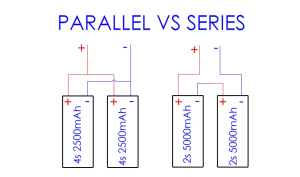
Series vs Parallel battery
Wiring batteries in series means connecting them end-to-end, which boosts the overall voltage while maintaining the same capacity. This configuration is ideal for devices that require a higher voltage to function efficiently, such as trolling motors, golf carts, and larger RVs.
On the other hand, wiring batteries in parallel involves connecting all positive terminals together and all negative terminals together. This increases the total capacity, allowing devices to run longer at the same voltage. It’s perfect for devices requiring extended operational time, like power banks for trolling motors, golf carts, and larger RVs.
Key Differences:
Voltage and Capacity: In a series configuration, the voltages of the batteries are added while the capacity remains constant. Conversely, in the parallel configuration, the capacity of the battery increases while the voltage remains constant.
Energy Output: The total available energy (in watt-hours) remains constant in both configurations. For example, two 12-volt batteries with a capacity of 100 Ah connected in series will output a 24-volt battery with a capacity of 100 Ah. When connected in parallel, they will output 12 volts with a capacity of 200 Ah. 2400 watt-hours are available in both configurations.
Battery Compatibility: It is critical to use batteries of the same voltage and capacity rating in both configurations. Mixing different voltages and capacities can lead to imbalance and potential damage.
Series Configuration: Dive Deeper
Battery series combination
When you wire batteries in series, the positive terminal of one battery connects to the negative terminal of the next, creating a chain. This increases the battery bank’s voltage while keeping the total battery capacity consistent. For instance, connecting three 12-volt batteries rated at 100 Ah in series results in a total voltage of 36 volts, with the capacity remaining at 100 Ah.
Advantages of Series Configuration:
- Increased Voltage: Essential for devices requiring more electric force.
- Lower Current: Allows the use of thinner wiring throughout the power system, reducing voltage drop and increasing efficiency.
- Utilization of Smaller Batteries: Achieve desired voltage without sourcing a larger battery.
- Flexibility in Design: Batteries can be arranged in various ways while maintaining the series connection.
Disadvantages:
- Dependency: If one battery fails, the entire chain breaks, rendering the system non-functional.
- Uneven Discharge and Recharge: Differences in battery capacity or self-discharge rates can lead to uneven discharge and recharge, potentially reducing battery lifespan.
Parallel Configuration: Dive Deeper
Battery parallel combination
Wiring batteries in parallel increases the total amp hour capacity, allowing devices to run longer at the same voltage. If two 12V batteries, each 100 Ah, are wired in parallel, the resulting configuration remains at 12 volts, but the capacity doubles to 200 Ah.
Advantages of Parallel Configuration:
- Increased Capacity: Devices run longer at the same voltage, ideal for extended use applications.
- Redundancy: If one battery fails, the device can still operate with reduced capacity, ensuring continuous power supply.
- Flexibility in Design: Offers design versatility based on device form factor and capacity requirements.
Disadvantages:
- Higher Current: A parallel setup may result in higher current draws, necessitating thicker cables and potentially leading to more voltage drop.
- Balancing Issues: Batteries need to be balanced correctly to prevent potential damage or reduced lifespan.
- Complex Charging: Might require a more intricate charging system to ensure even charging across all batteries.
Series-Parallel Connection
In some scenarios, you might need to combine the advantages of both series and parallel configurations. This leads to a series-parallel wiring method, where batteries are grouped in sets wired in series, and then these sets connect in parallel. This configuration provides both a voltage boost and an increase in amp hour capacity.
Charging Batteries in Series vs Parallel
Charging requires understanding each configuration’s unique characteristics. For series configurations, the charger’s output voltage should match the combined voltage of all batteries. For parallel configurations, the charger’s output voltage should equal the voltage of the individual batteries. A battery management system (BMS) can help monitor and control the charging process, ensuring each battery charges safely and evenly.
The Bottom Line
The decision to wire batteries in series vs parallel depends on your specific power requirements. Both configurations have unique advantages and potential challenges, especially when it comes to charging and maintaining balance. Safety should always be a top priority. Understanding the fundamentals of series and parallel battery configurations empowers you to make the right choice for your specific power needs and maximize your battery bank’s potential.